
The First 1,000 Days: Why Child Health Begins Before Birth
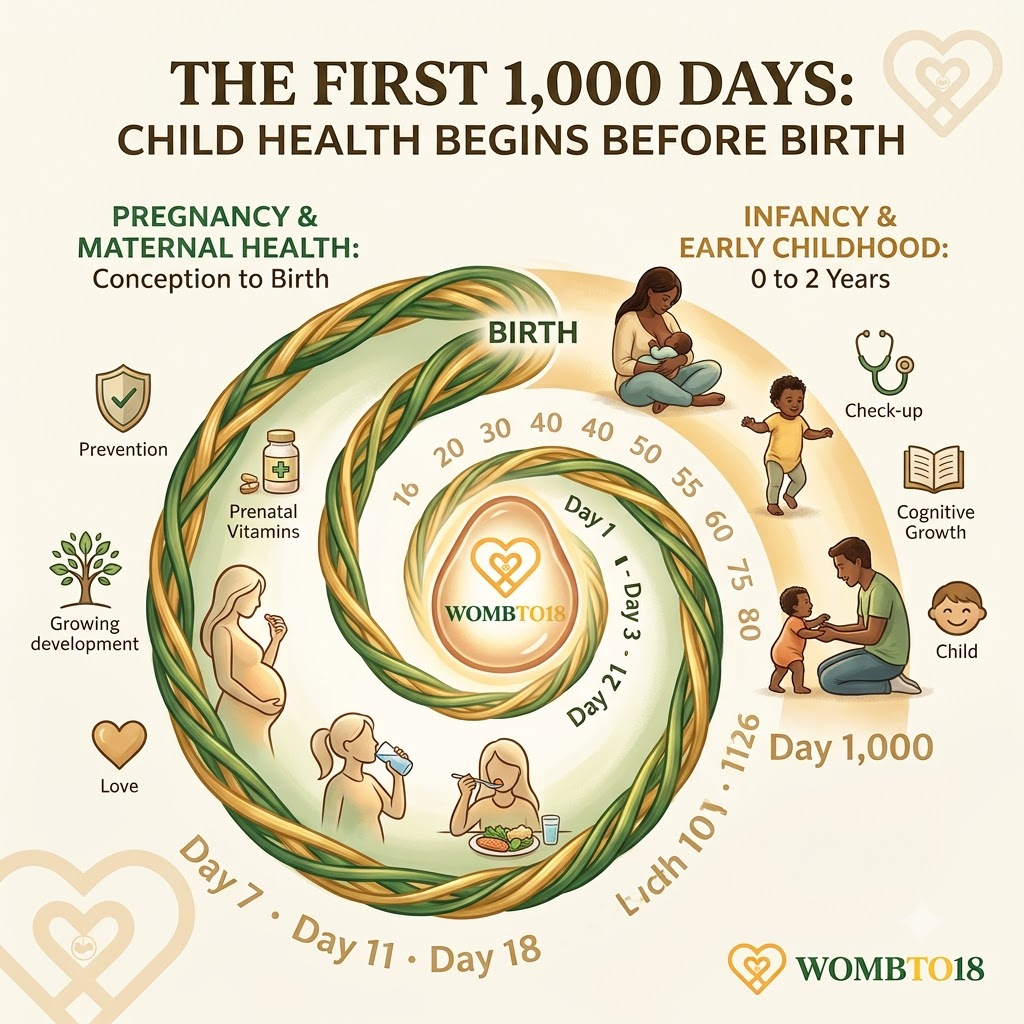
The first 1,000 days—from conception through a child's second birthday-are a foundational period for health and development. A child's journey is influenced not only by what happens after birth, but also by maternal health, nutrition, care, safety and the environment before and after delivery.
The most useful approach is to turn a broad health topic into a practical journey: understand what matters, know what can be monitored, recognize when professional input is needed, and keep the relevant information organized over time.
🤰Pregnancy and maternal health
Pregnancy and maternal health is the starting point. Families benefit from understanding what is appropriate for the child's age or the mother's stage of pregnancy, what is routinely recommended, and which decisions need individualized clinical advice.
🥗 Nutrition and feeding
Nutrition and feeding should be considered as part of the wider health picture rather than in isolation. A single measurement, symptom or event can be misleading without age, history, timing and context.
Responsive caregiving and early learning-
Responsive caregiving and early learning becomes more useful when it leads to an action: a routine check, a conversation with a clinician, a referral, a reminder, a change in the environment, or simply continued observation. The goal is not to create anxiety; it is to make appropriate preventive care easier to follow.
Immunization and preventive care -
Immunization and preventive care is also an area where communication matters. Parents, children, teachers and healthcare professionals may each hold different pieces of information. Clear records and clear responsibilities reduce the chance that an important concern is lost between settings.
Growth and development monitoring🏥
Growth and development monitoring should evolve as the child grows. WombTo18's journey-based philosophy is that useful health information should remain connected to the child's changing needs while access stays limited to the people who are authorized to see it.
When to seek professional help🩺
Online information can support health literacy, but it cannot diagnose an individual child or pregnancy. Seek advice from an appropriately qualified healthcare professional when symptoms are persistent, severe, unusual, worsening, or causing concern. For emergencies, use local emergency services or urgent medical care.
A practical checklist ✨
Use this article as a conversation starter. Write down the child's age or pregnancy stage, current concerns, recent appointments, relevant records, questions and any follow-up actions. Keeping these together can make healthcare conversations more efficient.
The WombTo18 perspective :
WombTo18 is designed around a simple idea: a child's health is a journey, not a collection of disconnected events. From pregnancy through childhood and adolescence, preventive milestones, health information, reminders and relevant interactions can be organized around the child's journey toward 18. The platform is intended to support families and institutions—not replace qualified medical care.
Frequently Asked Questions -
What is the first 1,000 days?
The first 1,000 days refers to the period from conception to a child's second birthday. It spans pregnancy, birth, infancy, and early toddlerhood, and is widely recognized by global health bodies as the window with the greatest influence on a child's lifelong physical and cognitive development.
Why is the first 1,000 days important?
This period shapes brain architecture, immune function, and growth patterns that influence health well into adulthood. Nutrition, caregiving, and environment during this window have outsized effects compared to later childhood, making early support and monitoring especially valuable.
What should parents or schools know about the first 1,000 days?
Parents and schools should know that maternal health, nutrition, responsive caregiving, and timely immunization all interact during this period. Consistent records and communication between caregivers and clinicians help ensure concerns are caught early rather than missed between settings.
When should a parent speak with a qualified healthcare professional?
Parents should consult a healthcare professional when they notice symptoms that are persistent, severe, unusual, or worsening, or when they have any concern about growth, feeding, or development milestones. Routine check-ups are also an appropriate time to raise questions.
Can technology help with tracking and follow-up?
Yes. Digital tools can help organize appointments, growth records, immunization schedules, and reminders in one place, making it easier for families and providers to stay aligned. Technology supports—but does not replace—professional medical guidance.