
Social-Emotional Learning in the Classroom in All Schools
A child who cannot name what they are feeling cannot manage it. A child who cannot manage it will act it out — in disrupted classrooms, broken friendships, and eventually, in broken adults.
Social-emotional learning (SEL) is not a feel-good programme schools run when they have spare time. It is the foundational skill set that determines whether a child's academic intelligence ever translates into functioning human capability. And the research on it is, at this point, overwhelming.
What SEL Actually Is (and Is Not)
There is a persistent misconception that SEL means teaching children to talk about their feelings in a circle once a week. That is not SEL. That is a theatre performance with no rehearsal.
SEL, as defined by the Collaborative for Academic, Social, and Emotional Learning (CASEL) — the organisation whose framework now underpins most evidence-based SEL curricula globally — involves the development of five core competency clusters:
Self-awareness
The ability to accurately identify one's emotions and understand how they influence behaviour.
Self-management
The ability to regulate emotions, control impulses, and set and achieve goals.
Social awareness
The ability to empathise with others, including those from backgrounds different from one's own.
Relationship skills
The ability to communicate clearly, listen actively, cooperate, negotiate conflict constructively, and seek help when needed.
Responsible decision-making
The ability to make ethical, constructive choices about personal and social behaviour.
These are skills. And like all skills, they can be taught, practised, and embedded — if the school creates the conditions for it.
Why Ages 6 to 12 Are the Critical Window
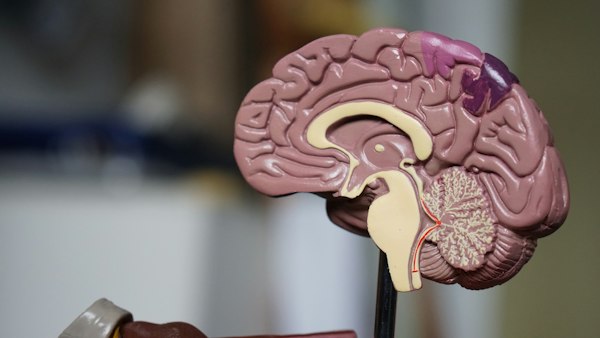
Brain development research is unambiguous about one thing: the period between ages 6 and 12 is the most plastic window for social-emotional skill formation outside of early childhood.
During this period, the prefrontal cortex — the brain region responsible for impulse control, emotional regulation, and social reasoning — is undergoing significant structural development. Neural pathways are being laid down. Habits of mind are being established. The emotional vocabulary a child builds between 6 and 12 will shape how they navigate stress, conflict, and connection for the rest of their lives.
What happens when this window is not used?
The neural pathways develop anyway — but shaped by default, not design. Children learn emotional regulation strategies from their environments: mimicking aggressive responses they observe at home, suppressing emotion because expression was punished, or dissociating because no adult ever helped them name what they were experiencing.
The classroom is the one environment that reaches every child in this age group, at scale, every single day. That is not a peripheral fact. It is the whole argument.
How Teachers Can Embed SEL Without Disrupting the School Day
The most common objection from school leadership to SEL implementation is curricular time. There is no room. The academic schedule is already full. This objection collapses when you understand that SEL is not additive to good teaching — it is intrinsic to it.
Here is what embedding SEL into daily classroom routines actually looks like:
Morning check-ins
Before instruction begins, a teacher asks students to identify their emotional state using a simple emotion wheel or a traffic-light system (red: I'm struggling, yellow: I'm okay, green: I'm ready). This normalises emotional awareness as a daily practice and gives the teacher real-time data on the room's readiness to learn. A child who is red cannot absorb mathematics. Knowing that is operationally useful.
Emotional vocabulary integration
Literature is the most obvious vehicle — every story involves characters experiencing emotions, making decisions, facing consequences. But SEL-informed teachers extend this to history (why did communities respond the way they did?), science (how did this scientist persist through failure?), and even mathematics (how do we handle frustration when a problem does not resolve?).
Structured conflict resolution protocols
Rather than defaulting to punitive responses when students fight, SEL-embedded classrooms use structured frameworks — such as the 'peace corner' model, where students involve in a conflict work through a guided sequence of perspective-taking questions before a teacher intervenes. This is not just kinder. It is more effective at reducing repeat incidents.
Cooperative learning structures
Pair and group work, when structured intentionally, builds relationship skills. The key word is structured — unstructured group work defaults to social hierarchies. Assigning roles, requiring active listening responses, and debriefing group dynamics turns every collaborative task into an SEL practice session.
Closing reflections
A two-minute end-of-day reflection — 'What challenged you today? What did you do well?' — builds self-awareness and metacognition simultaneously.
The Evidence on Academic Outcomes
The argument for SEL should not have to rest on wellbeing alone — though it would be sufficient if it did. But the academic evidence is equally compelling.
A landmark 2011 meta-analysis published in Child Development, examining 213 school-based SEL programmes involving over 270,000 students, found that students in SEL programmes showed:
An 11-percentile-point gain in academic achievement compared to control groups
Significantly reduced rates of classroom disruption, anxiety, and aggressive behaviour
More recent research has replicated and extended these findings across different cultural contexts, including several studies conducted in South and Southeast Asia.
A child who can regulate their emotions can attend.
A child who can attend can learn.
SEL is not a programme.
It is a precondition for learning.
The skills that determine whether a child can sit in a classroom and absorb instruction — regulate emotion, manage attention, navigate peer conflict — do not develop automatically. They are built in relationship, through practice, over time. Schools are where this happens, or does not happen.
Emotional vocabulary
Impulse regulation
Active listening
Conflict resolution
The question is not whether schools have time for SEL.
The question is whether we can afford what happens when they do not.
School Programmes
Bringing SEL to your school's classrooms?
WOMBTO18 provides school-embedded SEL programmes for children aged 6–12, including structured curricula, teacher training, and ongoing support through our specialist team.